Moving Heavy Machinery Without the Right Equipment
Equipment Transport in Port St. Joe, Mexico Beach, Cape San Blas, Wewahitchka, FL, and the Surrounding Areas for Skid Steers, Golf Carts, Side-by-Sides, and Compact Machinery When Trailers or Ramps Fail
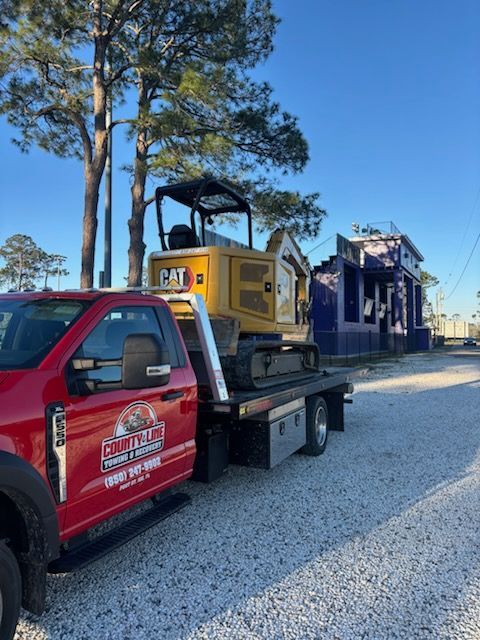
County Line Towing & Recovery provides equipment transport for contractors, property managers, landscapers, and seasonal residents who need to move skid steers, golf carts, side-by-sides, and other compact machinery across Port St. Joe and the surrounding coastal areas. You may have a machine that no longer runs under its own power, a rental unit that needs to be returned without a suitable trailer, or a piece of equipment purchased off-site that must reach your job site or storage yard by a specific date. This service handles wheeled and tracked machinery that weighs too much or sits too wide for standard vehicle towing but does not require a full semi-truck setup.
The work begins with confirming the dimensions, weight, and condition of the equipment you need moved. A flatbed tow truck with hydraulic tilt capability is used to load machinery that cannot be driven onto the deck. Winches and wheel chocks secure the load, and tie-down straps rated for the equipment's weight class prevent shifting during transit. Coastal roads near Cape San Blas and Mexico Beach often feature narrow access points, soft shoulders, and limited turnaround space, so the operator evaluates the pickup and delivery locations before scheduling the haul to avoid delays or property damage.
If you need a skid steer moved from a construction site to a storage facility or a golf cart delivered to a beachfront property, County Line Towing & Recovery can arrange a transport run that matches your timeline and location.
What Happens During an Equipment Transport
When you schedule a transport, you provide the equipment type, approximate weight, and whether the machine can roll freely or needs to be winched. The operator inspects the unit at pickup to check for hydraulic leaks, flat tires, or protruding attachments that might affect loading. If a bucket or blade is removable and extends beyond the deck, it may need to be detached or repositioned to keep the load within legal width limits. The flatbed is tilted to reduce the loading angle, and the machine is guided onto the deck using either its own drive system or a cable winch mounted to the truck.
Once secured, the equipment is driven directly to the destination address you provided. You will notice the machine arrives in the same operational state it left in, without added scratches from improper tie-downs or frame damage from dragging. County Line Towing & Recovery unloads using the same controlled tilt and winch process, placing the unit on level ground or at the edge of your designated staging area. The operator confirms with you that the equipment is positioned where you need it before releasing the straps and lowering the deck.
This service does not include mechanical repairs, refueling, or storage beyond the transport itself. If the equipment requires a permit due to size or weight, that responsibility typically falls to the owner unless otherwise arranged in advance. Deliveries to Wewahitchka or other inland locations may involve gravel roads or private driveways that require additional clearance verification before the truck can enter.
Clients often ask how transport differs from standard towing and what details are needed before scheduling a run. These answers address timing, dimensions, and local delivery conditions.
What types of equipment can be transported on a flatbed?
You can move skid steers, utility tractors, golf carts, UTVs, side-by-sides, small excavators, and other compact wheeled or tracked machines that fit within the deck's length and weight rating, typically up to 10,000 pounds depending on the truck configuration.
How long does it take to load and secure a piece of equipment?
Loading a standard skid steer or golf cart usually takes 15 to 25 minutes, including winching, positioning, and strap placement, though machines with non-functioning wheels or awkward attachment points may require additional time.
Why does the operator need to inspect the pickup location before arrival?
Coastal properties in Port St. Joe and Cape San Blas often have narrow driveways, low-hanging tree branches, or soft sand shoulders that limit where a flatbed can park and tilt safely without sinking or causing rutting.
When is a permit required for equipment transport?
Permits are generally needed when a machine exceeds state width or weight limits for public roads, but most skid steers and side-by-sides fall within legal parameters and can be moved without additional paperwork or escort vehicles.
How is pricing determined for a transport run?
Pricing is based on the distance between pickup and delivery, the weight and dimensions of the equipment, and whether the machine can self-load or requires winching, with rates typically quoted per mile or as a flat fee for local hauls.
If your equipment is sitting idle at a job site or needs to reach a new location before the next phase of work begins, County Line Towing & Recovery can coordinate a transport that keeps your schedule on track without requiring you to rent a trailer or arrange for a third-party hauler.