Marine Transport When Trailers Won't Work
Boat Towing in Port St. Joe, Mexico Beach, Cape San Blas, Wewahitchka, FL, and the Surrounding Areas for Vessels Stranded on Roadways, in Parking Areas, or Requiring Relocation Without Launch Access
County Line Towing & Recovery handles boat towing across Port St. Joe when watercraft need to move overland without trailering capability or when launching isn't an option. You need this service when a boat becomes disabled during transport, when marina moves require professional rigging, or when vessels sit on property without proper equipment for relocation. The Gulf Coast location means saltwater exposure, hurricane preparation moves, and seasonal storage transitions create specific transport scenarios that standard vehicle towing equipment can't address.
Boat towing involves securing marine vessels to specialized tow equipment that accounts for hull shape, weight distribution, and keel design. The work addresses situations where boats are stuck in driveways, need emergency removal from roadways after accidents, or require transport between storage facilities when owners lack towing vehicles or proper hitches.
Schedule a transport consultation to evaluate your vessel's current location and destination requirements.
How Marine Vessel Transport Differs From Standard Towing
Boat towing requires evaluating hull configuration and weight distribution before rigging begins, since watercraft aren't designed for the stress points that wheeled vehicles handle naturally. The tow operator assesses keel clearance, determines lift points that won't damage gelcoat or structural components, and secures loads to prevent shifting during road transport over varying terrain.
After the transport completes, your vessel sits exactly where you need it, properly positioned for storage access, marina delivery, or repair facility placement. County Line Towing & Recovery manages the rigging details that prevent hull damage during overland moves, which matters particularly for boats that haven't been on trailers or require positioning in tight spaces where standard trailer maneuvering isn't feasible.
The service handles boats on existing trailers as well as those sitting directly on ground surfaces or supports. Transport distances range from short local moves within Port St. Joe to longer hauls requiring highway travel, with pricing affected by vessel size, access challenges at pickup or delivery sites, and whether the boat has functional trailer components or needs full lifting support..
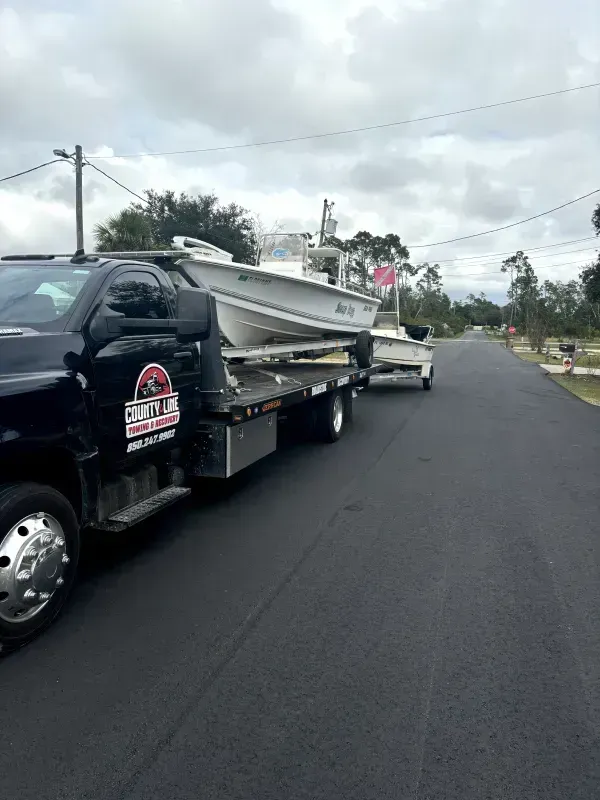
Vessel relocation in coastal areas brings specific questions about equipment compatibility, timing considerations, and how marine transport differs from standard vehicle towing.
What preparation does my boat need before towing?
The vessel should have loose items secured inside the cabin, antennas or towers lowered if removable, and any protruding hardware that could catch during transport either removed or protected, though the tow operator will assess structural rigging points regardless of your preparation level.
How does towing work for boats not currently on trailers?
The tow equipment lifts the hull using contact points that distribute weight without concentrating pressure on fiberglass or aluminum surfaces, similar to how marina lifts function but adapted for road transport rather than water launch.
When should I arrange boat transport in Port St. Joe?
Schedule transport during dry weather when possible, since wet ground conditions complicate lifting from unpaved surfaces, and plan marina moves around facility access hours to avoid delays at gated or staffed locations with restricted entry times.
What size boats can be towed this way?
Transport capability depends on vessel weight, hull length, and whether road permits are required for oversized loads, with smaller boats under twenty feet typically moving as standard calls while larger vessels may need route planning and escort coordination.
How is the boat secured during road transport?
Rigging uses multiple attachment points with straps rated for marine loads, positioned to prevent hull flex and movement while accounting for the fact that boats lack the anchor points and frame structure that vehicles provide for tie-down security.
County Line Towing & Recovery handles marine transport logistics that account for Port St. Joe's coastal conditions and the specific challenges of moving vessels designed for water across paved and unpaved surfaces. Arrange an on-site assessment to review your boat's current position and intended destination.