Reliable Transport When Your Vehicle Stops
Classic Towing in Port St. Joe, Mexico Beach, Cape San Blas, Wewahitchka, FL, and the Surrounding Areas for Breakdowns, Mechanical Failures, and Vehicle Relocations
Mechanical failures on Highway 98 or local streets leave passenger vehicles stranded with no safe way to reach repair shops or home locations. County Line Towing & Recovery handles classic towing for standard cars, sedans, and SUVs throughout Port St. Joe, using wheel-lift and flatbed methods that protect drivetrain components during transport. Drivers dealing with engine trouble, transmission failure, or electrical problems need immediate towing to move vehicles off travel lanes and into secure locations.
Towing for passenger vehicles involves securing the vehicle to prevent shifting during transport, selecting the appropriate lift method based on drive type, and choosing routes that avoid sharp turns or steep grades that could stress towing equipment. Operators inspect tie-down points and wheel positions before departing to confirm stable loading.
Request a towing response for your disabled vehicle to confirm availability and estimated arrival time based on current location.
What Proper Towing Requires
Classic towing uses lift points specified by vehicle manufacturers to avoid damaging suspension mounts or undercarriage panels, with operators adjusting boom height and wheel cradle positions before securing straps. The tow truck maintains steady speeds during transport and avoids abrupt braking that could cause load shift or strap slippage.
County Line Towing & Recovery completes each tow with the vehicle positioned safely at the destination, straps removed without leaving marks, and keys returned to the owner. You'll see no scraping along the vehicle's underside, no stress cracks near lift points, and tires remain inflated and undamaged from the securing process.
Towing services cover vehicle transport only and do not include roadside repairs, fuel delivery, or mechanical diagnostics performed at the breakdown location. Operators can recommend nearby repair facilities based on the type of failure described but do not provide estimates for mechanical work.
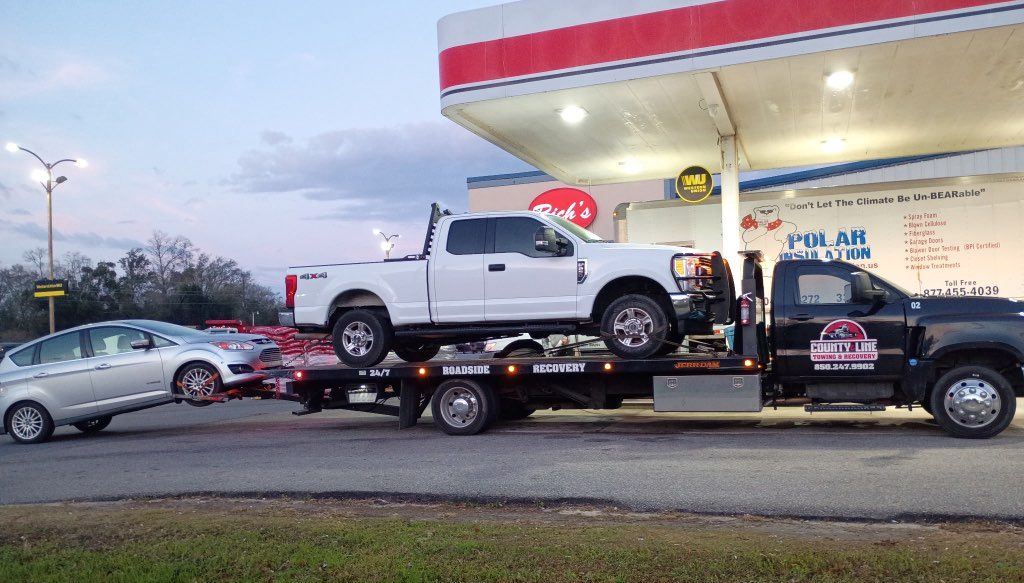
Standard towing involves straightforward transport logistics, though specific vehicle conditions and destination requirements affect the process.
What information do I need to provide when requesting towing?
Operators need your exact location, vehicle make and model, the type of failure or reason for towing, and your preferred destination such as a repair shop, residence, or storage facility.
How does all-wheel drive affect towing methods?
All-wheel drive vehicles often require flatbed towing rather than wheel-lift methods to prevent drivetrain damage caused by towing with some wheels on the ground while others remain lifted.
What happens if my vehicle breaks down on a narrow road in Port St. Joe?
Operators assess access clearance and traffic conditions to determine safe positioning for the tow truck, sometimes requiring temporary traffic control or repositioning the disabled vehicle slightly before lifting.
How is the vehicle secured during transport?
Wheel straps or chains attach to designated frame points or wheel assemblies, with tension adjusted to prevent movement without over-tightening that could bend suspension components or crack rims.
What should I remove from the vehicle before towing?
Take personal belongings, valuables, and any loose items from the interior or trunk that could shift during transport, though the vehicle itself remains locked and secure throughout the tow.
County Line Towing & Recovery provides dependable classic towing for passenger vehicles across Port St. Joe whenever breakdowns or mechanical issues require safe transport. Arrange towing service by calling as soon as your vehicle becomes disabled and unsafe to drive.